


Olive oil shampoo: the complete guide to what it does and why it works
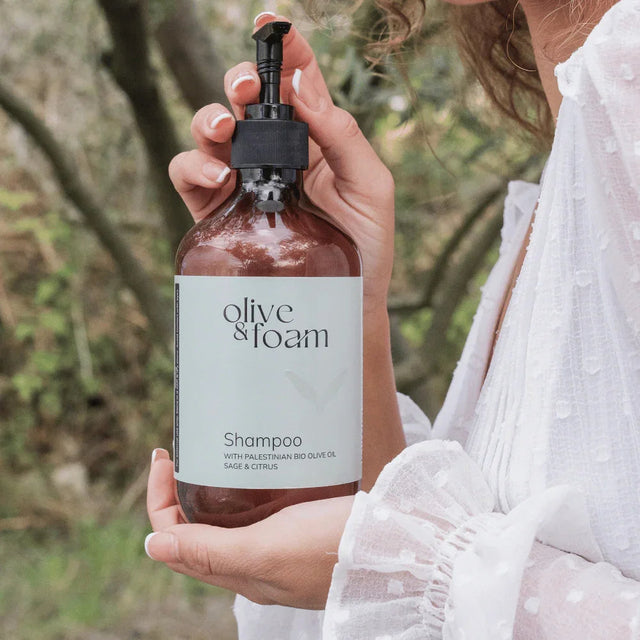
Olive oil shampoo has become one of the most searched personal care products in the UAE and GCC — and for good reason. As consumers move away from harsh sulphate-heavy formulas toward ingredients that actually nourish rather than strip, olive oil has emerged as one of the most effective natural additions to hair care. But not all olive oil shampoos are the same, and understanding what to look for makes the difference between marketing and something that genuinely works.
This guide covers what olive oil actually does in a shampoo formula, why the origin of the oil matters, and what to look for when choosing the best olive oil shampoo for your hair type.
What does olive oil do in a shampoo?
Olive oil (listed on ingredient labels as Olea Europaea Fruit Oil) contains oleic acid — a fatty acid with a molecular structure similar to the natural lipids found on the hair's outer cuticle layer. This similarity allows it to integrate with the hair surface rather than simply coating it, which is what distinguishes it from heavier mineral oils or silicones.
In a shampoo formula, olive oil works primarily as a conditioning agent — it balances the cleansing action of surfactants and leaves hair feeling softer and more manageable after washing, without the heaviness that some conditioning oils can leave behind.
The key benefits of olive oil in shampoo:
- Conditions while cleansing — reduces the drying effect of surfactants on the hair shaft
- Improves combability — particularly when paired with conditioning polymers like Polyquaternium-7
- Adds natural shine — the fatty acids smooth the hair cuticle, which reflects light more evenly
- Suitable for all hair types — lightweight enough not to weigh fine hair down, nourishing enough for coarser or drier hair
Why Palestinian olive oil specifically?
Not all olive oil is the same. The quality, fatty acid profile, and nutrient content of olive oil varies significantly depending on the variety of olive, the soil, the climate, and the pressing method.
Palestinian olive oil comes from some of the oldest cultivated groves in the world — some trees are hundreds of years old, with root systems that have adapted to the rocky, mineral-rich soil of the region over generations. The Rumi and Nabali varieties grown in Palestine are known for their high oleic acid content, which is precisely the property that makes olive oil effective in hair and skin care.
At Olive & Foam, Palestinian olive oil is the hero ingredient in every product — not as a marketing label, but because it is genuinely the best quality oil available for what we are trying to do. Every bottle supports the farmers who grow it.
What to look for in an olive oil shampoo
When choosing an olive oil shampoo, the ingredient list tells you everything. Here is what to look for:
1. Olea Europaea Fruit Oil on the ingredient list
This is the INCI name for olive oil. If it appears in the top half of the ingredient list, the concentration is meaningful. If it appears at the very end, it is likely a trace amount added for marketing purposes.
2. A gentle surfactant base
The best olive oil shampoos pair the oil with mild cleansing agents. Cocamidopropyl Betaine is a good sign — it is a gentle, conditioning surfactant derived from coconut oil that cleans effectively without stripping the hair's natural oils.
3. A conditioning polymer
Ingredients like Polyquaternium-7 or Polyquaternium-10 work alongside olive oil to improve slip, reduce frizz, and make hair easier to comb after washing. Their presence in the formula is a sign that the product was formulated for hair performance, not just fragrance.
4. No misleading claims
Some olive oil shampoos market themselves as sulphate-free or paraben-free when they are not. Always check the INCI list rather than relying on front-of-pack claims.
Olive oil shampoo and conditioner — why the combination matters
An olive oil shampoo works best when followed by a matching conditioner. The shampoo cleanses and adds an initial conditioning layer — but a conditioner with olive oil, glycerin, and emollient alcohols (like Cetostearyl Alcohol and Cetyl Alcohol) adds a richer second layer that truly seals the cuticle and improves softness.
The Olive & Foam Shampoo and Conditioner are formulated to work as a system — both using Palestinian olive oil, both carrying the same Sage & Citrus fragrance, and both designed to leave hair noticeably softer and more manageable after every wash. If you want to try both together, the Shower Set includes the shampoo, conditioner, and body wash in one gift-ready box.
Is olive oil shampoo good for all hair types?
Yes — with some nuance. Olive oil shampoo works well for:
- Dry or damaged hair — benefits most from the conditioning properties of olive oil
- Normal hair — maintains balance, adds shine without heaviness
- Fine hair — provided the formula uses olive oil in appropriate concentrations alongside lightweight surfactants, not heavy oils
- Colour-treated hair — gentle surfactants and conditioning oils are kinder to colour-treated strands than harsh cleansers
People living in hot, dry climates — like the UAE — tend to benefit particularly from olive oil shampoos because the conditioning properties counteract the drying effect of heat, sun, and air conditioning on hair.
How often should you use olive oil shampoo?
Every day if you prefer — the gentle surfactant base of a well-formulated olive oil shampoo makes it suitable for daily use without stripping the scalp. For most people, washing every 2–3 days is enough to maintain a clean, healthy scalp while preserving the hair's natural moisture balance.
The Olive & Foam approach
Every product in the Olive & Foam range is built on the same principle: real Palestinian olive oil, honest ingredient formulation, and a supply chain that supports the farmers who grow it. The shampoo is the best place to start — but the full range carries the same origin, the same fragrance, and the same story.


0 تعليقات
لا توجد تعليقات على هذا المقال. كن أول من يترك رسالة!